Student Life in Bucharest: What It's Actually Like
Before you land, it helps to know what kind of student city you're walking into. Bucharest isn't a small, sleepy university town — it's a full-blown capital city that just happens to be packed with students.
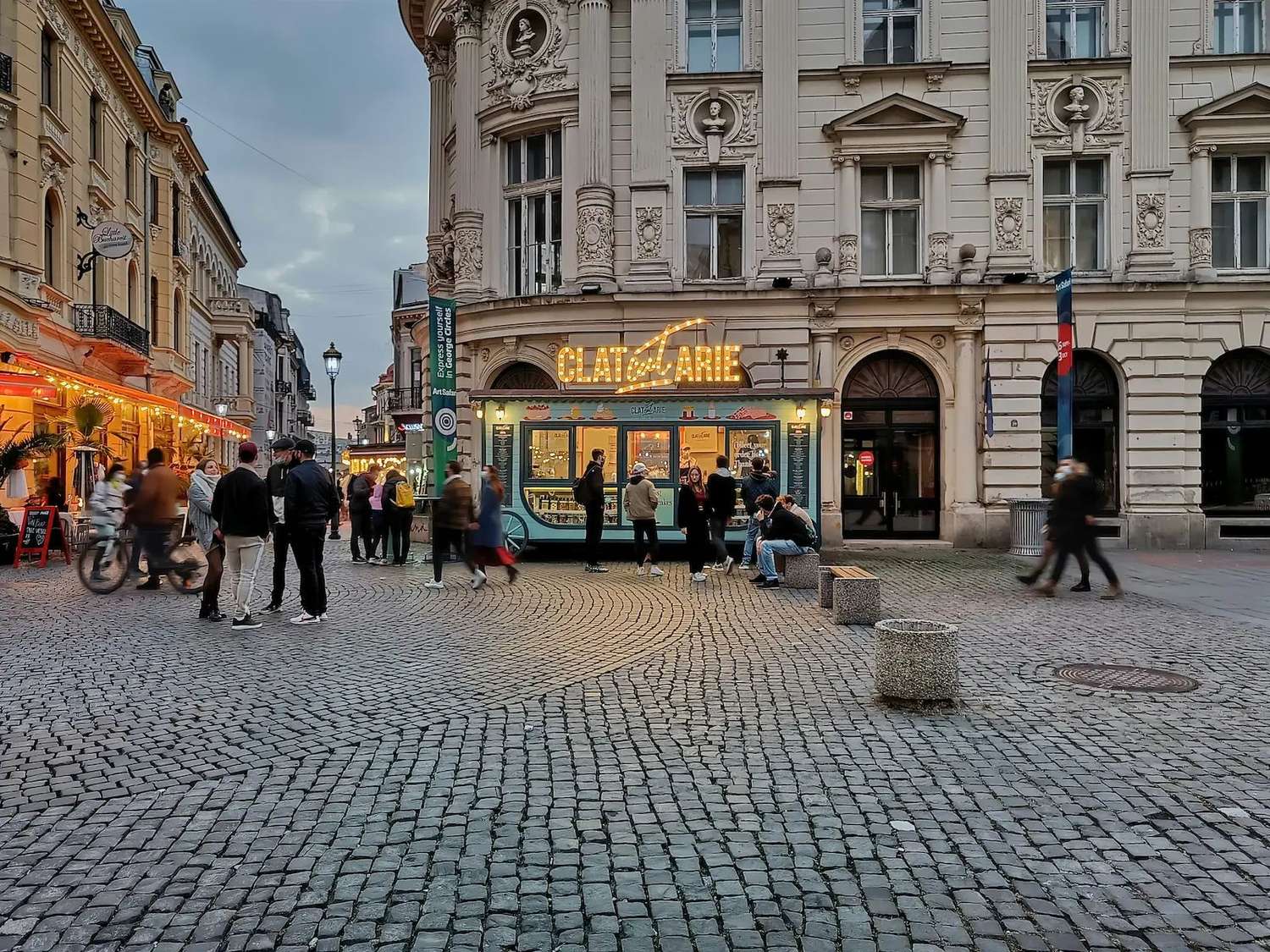
Romania's Biggest University City
Bucharest is home to nearly 40 universities — around 16 public and roughly 19 private — making it by far the largest university center in the country. Bucharest alone accounts for close to a third of all undergraduate students in Romania, putting the city's student population somewhere in the range of 120,000+, spread across everything from massive public universities to smaller specialized schools. Add in a steadily growing international student population — Romania has gone from under 14,000 foreign students a little over a decade ago to well over 25,000 today — and you get a city with a genuinely large, genuinely international student scene, not a token handful of exchange students tacked onto a local campus.
Where It All Centers
If Bucharest's student life has a geographic heart, it's Piața Universității (University Square) — home to the University of Bucharest's historic main building, sitting right at the boundary between the academic city and the Old Town's nightlife. A short walk away, Piața Romană anchors a second cluster around ASE, one of the country's largest and busiest student squares in its own right. Between these two points, and the residential streets of the Armenian Quarter just north of them, you get a dense, walkable zone where lecture halls, cafés, cheap eats, and bars all sit within a few minutes of each other — which is a big part of why this particular stretch of the city has become the default place for students, exchange or otherwise, to actually live.
The Academic Rhythm
Like most of continental Europe, the Romanian academic year is split into two semesters: roughly October to early February, and February to June, each ending in an exam session. Course loads and teaching styles vary a lot by university — the bigger public universities tend to mix large lecture-hall courses with smaller seminars, while the more specialized schools (arts, music, architecture) lean more heavily into small-group, studio-style teaching.
The Vibe
What makes Bucharest distinct as a student city isn't just the number of students — it's the setting. You're studying in a city with grand, faded 19th-century boulevards sitting next to blunt communist-era apartment blocks, ornate Orthodox churches around the corner from third-wave coffee shops, and a nightlife scene that punches well above what you'd expect from the affordability of everything around it. It's rougher around the edges than a place like Vienna or Prague, and that's genuinely part of the appeal — it feels lived-in and real, not curated for tourists.

Living costs stay low enough that going out regularly, traveling most weekends, and still keeping a functional student budget is realistic in a way it simply isn't in most Western European capitals — which is a big reason Bucharest has quietly become one of the more popular Erasmus destinations in the region.
A Growing International Community
The international student infrastructure here has matured a lot in recent years — ESN chapters at the major universities, buddy programs, welcome weeks, and a steady stream of exchange partnerships mean you're not pioneering anything by studying here. The systems for meeting people, getting oriented, and settling in are well established (we cover exactly how to use them in our guide to making friends during Erasmus).
Settling Into the City
The best student cities are the ones where your daily life is genuinely walkable — where "going out," "getting to class," and "meeting friends" don't require three different modes of transport. ErasmusPass places students in exactly the neighborhoods this article describes, so from day one, you're already living in the middle of it.
Live in the middle of it, not on the edge of it
Our apartments sit right between Piața Universității and Piața Romană.